Agro-real estate is currently being sold as Nigeria’s next big wealth play.
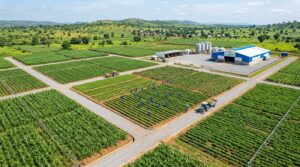
You’ve probably heard the pitch: Own farmland. Earn passive income. Watch your asset grow.
Sounds compelling, right?
But here’s what happens when you actually dig into the numbers, talk to real investors, and look past the marketing: the story becomes dramatically different.
The opportunity is real. But the narrative being sold is dangerously oversimplified. And in 2026, that gap between marketing and reality is where most investors will either win big or get burned.
1. Demand Is Real, But the Industry Has Already Changed
Nigeria is not speculating about food demand. It’s under real structural pressure.
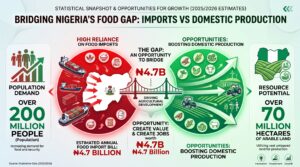
- Over 200 million people to feed
- Over $4.7 billion is spent annually on food imports
- About 70 million hectares of arable land are still underutilized
This is not hype. That’s a structural gap. But here’s what the market is quietly saying:
Demand alone is no longer enough. Structure is everything. The old model was simple: Buy land. Wait. Sell later. That model is fading.
In 2026, serious players are shifting toward structured agro-real estate, where land is tied to production systems, food processing, and actual revenue cycles.
Operators like Assetrise Limited are already leaning into this shift, moving beyond selling land to building productivity-driven assets. If your investment depends only on land appreciation, you’re not early. You’re late.
2. Capital Is Entering, But It’s No Longer Naive
Agro-real estate is no longer a fringe idea. It’s being positioned as a serious asset class, even competing with traditional real estate categories. The numbers support this:
- Agro investments grew by ~15% in 2025
- Agriculture contributes about 25% of Nigeria’s GDP
But here’s the part most people miss:
Capital is not rushing in blindly. It’s moving with caution.
Smart money is flowing into:
- managed plantation systems (oil palm, cocoa, coconut)
- structured estate models with professional oversight
- integrated value chains (farm → processing → market)
Not random plots. The market is not rewarding access to land. It’s rewarding control over outcomes.
3. The Trust Deficit Is Still the Loudest Signal
If you ignore this, you’ll misread the entire market.
Across investor conversations and platforms like Reddit, one message keeps repeating:
- “Too many scams”
- “Verify everything.”
- “Not all platforms are credible.”
This is not noise. It’s pattern recognition. The agro investment space has been damaged by:
- failed schemes
- unrealistic return promises
- lack of transparency
So even as awareness grows, Trust is growing much more slowly. And that gap is shaping investor behavior more than any advertisement.
4. The Opportunity Is Massive, But So Is the Friction
On paper, agro-real estate appears straightforward. Affordable land. High demand. Government support.
But reality adds resistance:
- Ogun farmland: ₦500,000 – ₦2.5M per acre
- Oyo farmland: ₦250,000 – ₦1M per acre
Accessible? Yes. Easy? No.
Because returns depend on:
- infrastructure (roads, storage, logistics)
- security conditions
- land ownership clarity
- operational execution
Add currency volatility for diaspora investors, and the picture becomes clearer: This is not a passive investment. It’s an execution strategy.
5. The Market Has Already Divided. Most People Just Haven’t Noticed
There are now two types of investors in agro-real estate:
1. Narrative Buyers
Driven by:
- “passive income” messaging
- low-effort expectations
- short-term thinking
2. System Thinkers
Focused on:
- crop timelines (often 3–7 years)
- yield economics
- operational structure
- risk management
And here’s what the market is quietly doing:
It is a rewarding discipline and punishing shortcuts. The gap between these two groups is widening, and it won’t be obvious until results start showing.
🔻 So What Is the Market Actually Saying?
Strip away the noise, and the message becomes clear:
- Agro-real estate is real
- But it is not simple
- And it is not forgiving of ignorance
It is evolving into a Structured, execution-heavy asset class where systems, not promises, determine returns.
🔻 How Smart Investors Are Thinking About Agro Real Estate in 2026
This is where most people get it wrong. They consume information, but don’t change how they think. Serious investors use filters.
1. The System Test: What exactly generates the return? Is it land appreciation, or a functioning production system?
2. The Operator Test: Who is responsible for execution? What is their track record?
3. The Reality Test: What risks are clearly stated? (Not assumed. Not hidden. Clearly stated.)
If an opportunity fails any of these tests, it’s not agro-real estate; it is a gamble, and you must beware.
🔻 Final Thought
Agro-real estate in 2026 is not a scam. But it’s also not what it’s being marketed as by most businesses. It’s becoming more structured, more competitive, and far less forgiving.
And right now, most people are still listening to the loudest voices… Not the most accurate ones.
Before You Invest in Agro-real Estate, Don’t Just Ask, “Is this profitable?” Ask:
- What system is generating the returns?
- Who is accountable for execution?
- What evidence proves this works?
Because in this market:
Clarity is not optional. It’s protection.